Lawyer
A qualified advisor and representative in legal matters.

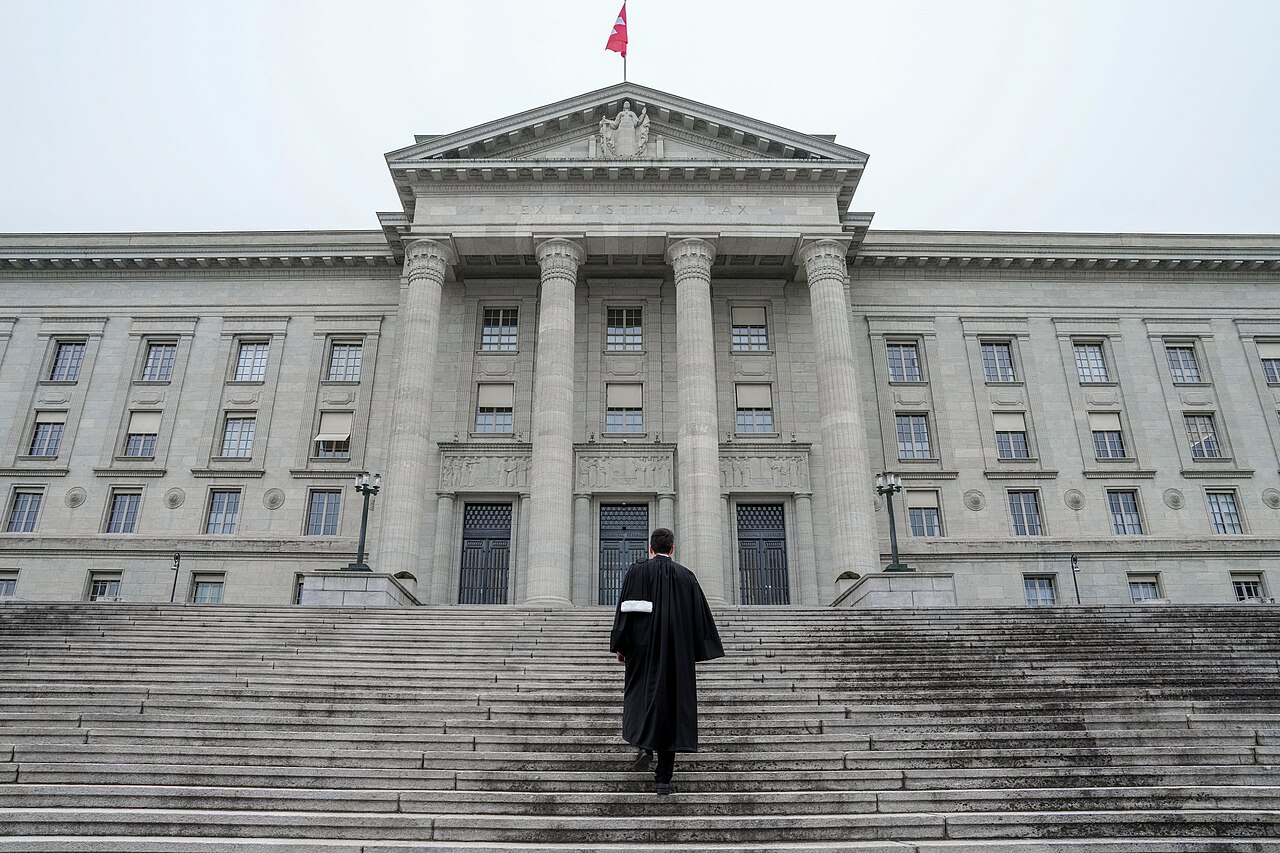
Giles Laurent · CC BY-SA 4.0
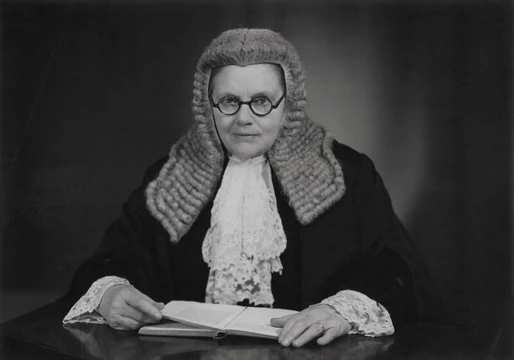
A lawyer is a person qualified to offer advice about the law, draft legal documents, or represent individuals in legal matters. The exact nature of a lawyer's work varies depending on the legal jurisdiction and the legal system, as well as the lawyer's area of practice. Historically, the role of lawyers can be traced back to ancient civilizations such as Greece and Rome.
- field
- Legal profession
- known_for
- Offering legal advice, drafting documents, representing clients in court
- education
- Undergraduate law degree to postgraduate education and professional training; often requires passing a bar examination
- types
- Barristers, solicitors, conveyancers, notaries, canon lawyers, patent attorneys, trademark attorneys, scriveners, legal executives
Lore & Background
In many jurisdictions, the legal profession is divided into various branches, including barristers, solicitors, conveyancers, notaries, and canon lawyers, who perform different tasks. England emerged from the Middle Ages with a complex legal profession, evolving by the 19th century to a single division between barristers and solicitors. Some countries that originally had multiple legal professions have since fused them into a single type of lawyer, as seen in many common law countries and notably in France, where a major fusion occurred in 1971, with further reforms in 1990 and 1991 affecting specific branches like avocats and conseils juridiques.
Reader's Guide
Lawyers apply abstract legal theories to solve specific problems, and some work primarily in upholding the rule of law, human rights, and the interests of the legal profession. The title and regulation of lawyers vary: in many European countries, lawyers were historically addressed as 'doctor,' while in England and other common law countries this title was not used. In French and Dutch-speaking countries, lawyers are addressed as 'Maître' or 'Meester,' and in Poland the informal title 'Mecenas' is used. The responsibilities of lawyers include oral arguments in court, research and drafting of court papers, advocacy in administrative hearings, and client intake and counseling. In some jurisdictions, litigants may argue on their own behalf, while in others representation by a lawyer is mandatory.
Did You Know?
- In some jurisdictions, the legal profession is divided into barristers, solicitors, conveyancers, notaries, and canon lawyers.
- France merged its jurists in a major reform in 1971, with additional changes in 1990 and 1991 affecting specific branches like avocats and conseils juridiques.
- In the United States, the preferred term for one practicing law is 'attorney at law,' abbreviated to 'attorney.'
- Historically, lawyers in some European countries were addressed with the title of doctor, a practice that transferred to many countries in South America and Macau, but this was not standard in most European countries, es
Ancient Roots and the Shaping of a Profession
The practice of law stretches back to some of the earliest organized civilizations, with clear evidence of legal advocates appearing in both ancient Greece and ancient Rome. From those early foundations, the role evolved dramatically across centuries and continents. In England — often regarded as the birthplace of the common law tradition — the medieval period produced a remarkably intricate web of specialized legal roles, comparable in complexity to what civil law systems still maintain today. By the nineteenth century, however, that tangle had simplified into the familiar two-track split between barristers and solicitors. Yet the story did not end there. Over the twentieth and twenty-first centuries, numerous nations that once maintained multiple distinct legal professions chose to merge them into a single, unified category of lawyer. Many of these were common law countries, but the trend was not exclusive to that tradition. France, a civil law nation, consolidated its various jurist roles in 1990 and 1991, a move widely understood as a strategic response to the competitive pressure exerted by Anglo-American legal markets. The result is a global landscape where the very definition of a lawyer shifts depending on which country's legal culture you are examining.
A Mosaic of Specialized Roles
Rather than a single monolithic occupation, the legal world in many countries is a patchwork of distinct professional identities. In jurisdictions that preserve the older English model, a barrister — sometimes called an advocate or counselor — focuses on presenting arguments before judges, especially in higher courts, while a solicitor (or attorney) handles case preparation, client counseling, and document drafting. Some solicitors also appear in court, blurring the line. Beyond these two, other specialized practitioners include conveyancers who deal with property transfers, notaries who authenticate documents, canon lawyers who operate within religious legal frameworks, patent attorneys, trademark attorneys, scriveners, and legal executives. Civil law countries take a different approach entirely: instead of one unified lawyer, they employ a broad array of legally trained individuals collectively called jurists, some of whom hold court-advocacy licenses while others do not. In certain civil law nations, a parallel split exists between advocates and procurators. The United States, India, Pakistan, and Sri Lanka represent the fused model, where a single practitioner can perform nearly every function that once belonged to separate roles. This diversity makes it genuinely difficult to craft a single definition of legal practice that applies worldwide.
The Road to the Bar and the Language of Rank
Becoming a lawyer is far from a uniform journey. Depending on the country, the educational pathway can begin with an undergraduate law degree or demand postgraduate study plus additional professional training. In many jurisdictions, candidates must also pass a bar examination before they are permitted to practice. Once admitted, the way a lawyer is addressed reveals deep cultural and historical roots. In southern European nations such as Portugal, Italy, and Malta — and in parts of South America and Macau — lawyers have traditionally carried the title doctor, a legacy of the University of Bologna, where the very first university degrees in the eleventh century were law doctorates. England and other common law countries, by contrast, never adopted that convention; most American J.D. holders, for instance, do not use doctor and instead append Esq. to their name. French-speaking and Dutch-speaking countries use Maître or Meester, while Poland employs Mecenas. In South Africa and India, bar-admitted lawyers may style themselves Advocate, and Italian graduates who clear the bar use Avvocato. The American term attorney at law itself descends from the verb to attorn, meaning to transfer one's rights and obligations to another.
The Daily Work: Counsel, Advocacy, and the Rule of Law
At its core, legal practice is the act of taking abstract theories of law and applying them to the concrete problems of real people. A lawyer might draft a contract, advise a client on regulatory compliance, or stand before a judge and jury to argue a case. In some jurisdictions, certain specialist lawyers hold exclusive rights of audience in court, while in fused systems, courtroom advocacy is one specialization among many without a legal monopoly. The degree to which a lawyer's presence is mandatory also varies: in some countries, a litigant may choose to represent themselves, whereas in nations like Venezuela, no individual may appear before a judge without a lawyer. Beyond the courtroom, a significant portion of the profession is devoted to broader institutional work — upholding the rule of law, defending human rights, and safeguarding the integrity and interests of the legal profession itself. This dual identity, as both problem-solver for individual clients and guardian of systemic legal principles, is what distinguishes the role from other advisory professions and gives it a unique place in every society's fabric.
Gallery



Frequently Asked Questions
Who is a Lawyer?
A Lawyer is a professionally trained individual authorized to counsel clients on legal matters, prepare legal paperwork, and advocate on their behalf before courts or other tribunals. The specific duties shift based on the jurisdiction and the branch of law they specialize in.
What does a Lawyer actually do day-to-day?
Core tasks include advising clients on their rights and obligations, drafting contracts and other legal instruments, and presenting arguments in court or during negotiations. Depending on their specialization, a Lawyer may also handle regulatory compliance, intellectual property filings, or property-transfer work.
What education and qualifications does a Lawyer need?
The typical path begins with an undergraduate law degree, followed by postgraduate study and hands-on professional training. In most jurisdictions, candidates must also pass a bar examination before they are permitted to practice independently.
What types of Lawyers exist?
The profession spans a wide range of specializations, including barristers, solicitors, conveyancers, notaries, canon lawyers, patent and trademark attorneys, scriveners, and legal executives. Each type concentrates on a distinct area such as courtroom advocacy, property transfer, or intellectual-property protection.
How old is the Lawyer profession?
The role of the legal advisor and advocate stretches back to ancient civilizations, with clear examples in both Greek and Roman societies. Over millennia, that early function has evolved into the highly regulated, specialized field recognized today.
More in Legal Professions 1-24
Elsewhere in the Legal Professions universe
Spotted an error? Know more?
This is a living reference — every entry is fact-audited, and reader corrections feed straight into our audit queue. Suggest an edit · See this site's audit record