
Negotiation
Dialogue to resolve differences and reach mutual agreement.

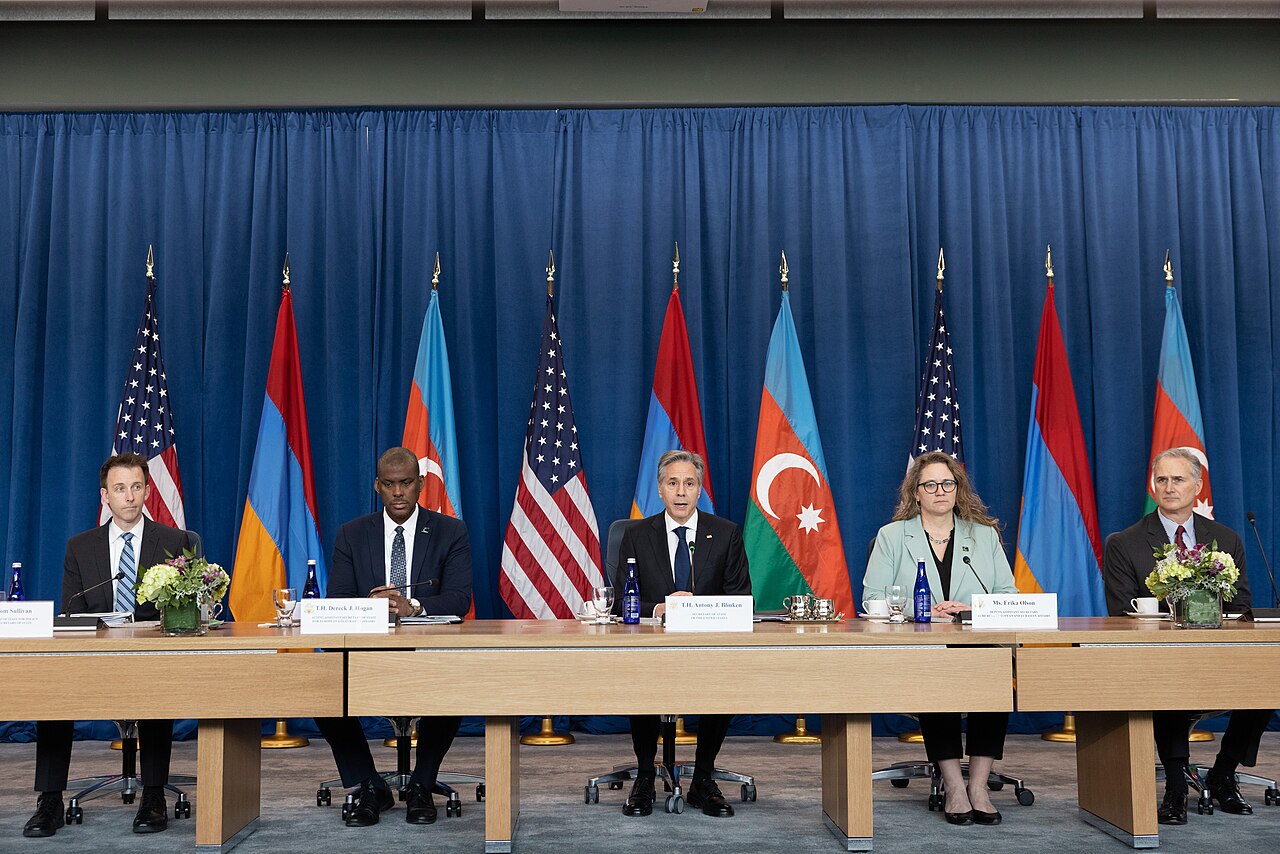
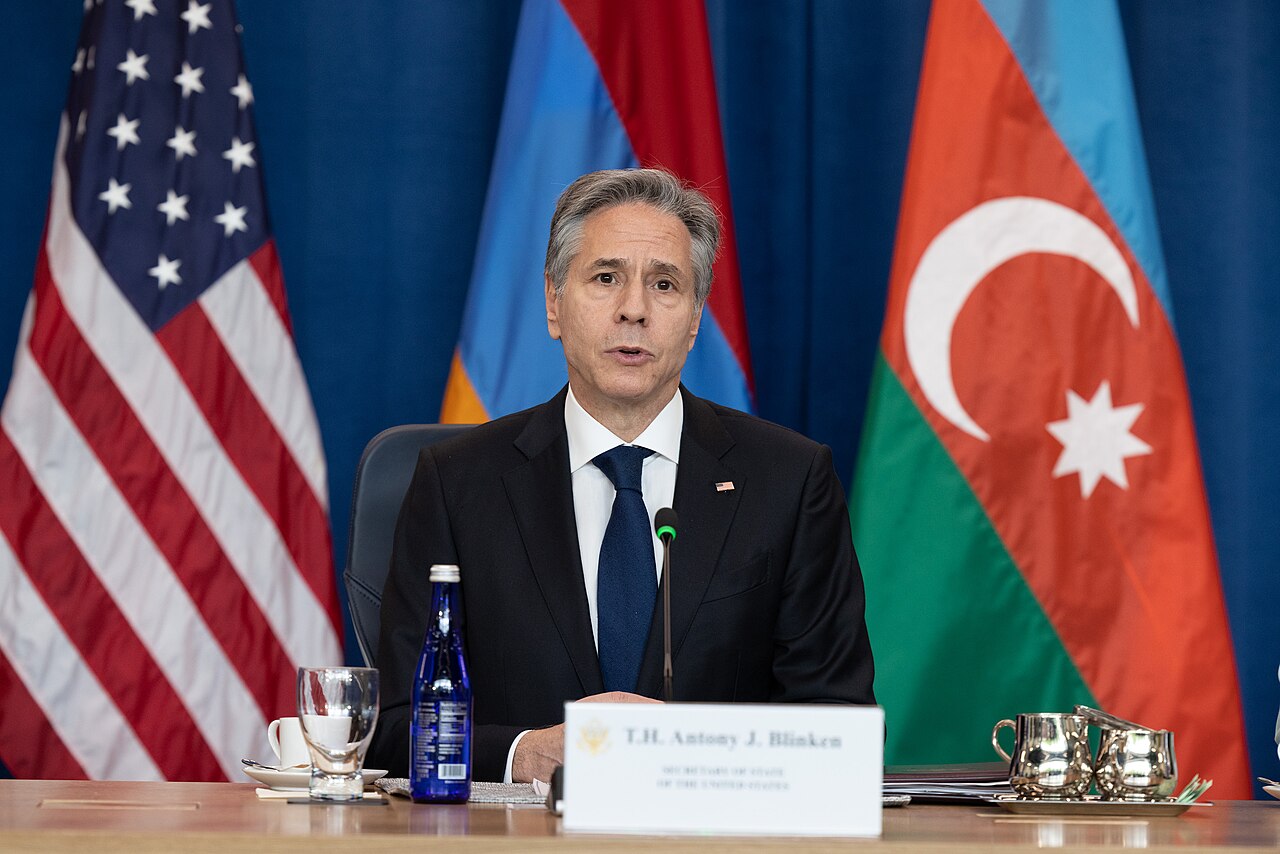
U.S. Department of State · Public domain
Negotiation is a dialogue between two or more parties to resolve points of difference, gain an advantage, or craft outcomes to satisfy various interests. It occurs in many contexts, including business, government, legal proceedings, and personal situations, and can be conducted by humans or automated machines.
- field
- Conflict resolution, business, diplomacy
- known_for
- Distributive and integrative negotiation types
- types
- Distributive, integrative, text-based, integrated, mediated
- key_concept
- Negotiation pie
Lore & Background
The word 'negotiation' originated in the early 15th century from Old French 'negociacion', from Latin 'negotiatio' (neg- 'no' and otium 'leisure'), meaning 'business, trade, traffic'. By the late 1570s, it had shifted to mean 'to communicate in search of mutual agreement'. Negotiation theorists generally distinguish between two primary types: distributive negotiation and integrative negotiation, though labeling varies. Distributive negotiation, also known as win-lose or hard-bargaining, operates under zero-sum conditions assuming a fixed pie of benefits. Integrative negotiation, also called win-win or principled negotiation, attempts to expand the pie by creating value through trade-offs or reframing issues. Text-based negotiation involves working up a draft text that all parties accept, often using the principle that 'nothing is agreed until everything is agreed'.
Reader's Guide
Negotiation is a fundamental process in human interaction, from daily personal exchanges to high-stakes international diplomacy. Its significance lies in its ability to resolve conflicts, form relationships, and maximize mutual gains. The distinction between distributive and integrative negotiation shapes strategy: distributive negotiation suits one-off encounters where parties seek to claim value from a fixed pie, while integrative negotiation fosters long-term relationships by expanding value. Trust is a major factor in success, though some argue interdependence is more effective than trust for win-win outcomes. Professional negotiators specialize in fields such as union bargaining, peace talks, or hostage situations. Automated negotiation, where algorithms model participants and processes, represents a modern evolution. The concept of the 'negotiation pie' illustrates how value can increase, shrink, or stagnate, with biases like the small pie bias or incompatibility bias potentially hindering optimal outcomes. Mediation involves a third party assisting conflicting parties, contrasting with arbitration where parties commit to a third party's decision. Negotiation's legacy endures as a tool for cooperation and conflict resolution across all sectors of society.
Did You Know?
- The word 'negotiation' comes from Latin 'neg-otium', meaning 'no leisure'.
- Distributive negotiation is also called win-lose, compromise, or hard-bargaining negotiation.
- Mediation is a form of negotiation where a third party helps conflicting parties negotiate.
- Automated negotiation requires correct modeling of participants and process.
Gallery

Frequently Asked Questions
What is Negotiation in the context of legal professions?
Negotiation is a structured dialogue carried out between two or more parties with the goal of resolving disagreements, securing a favorable position, or shaping an outcome that addresses multiple interests. It functions as a core mechanism in conflict resolution, business dealings, and diplomacy.
What are the main types of Negotiation?
The field recognizes distributive and integrative negotiation as its two primary categories, alongside text-based, integrated, and mediated forms. Distributive approaches treat the available resources as a fixed pie to be divided, while integrative strategies aim to expand what both sides can gain.
What is the 'Negotiation Pie' and why does it matter?
The Negotiation Pie is the central concept in the field, representing the total pool of value that parties can claim or create during a dispute. Understanding whether the pie is fixed or expandable directly shapes which negotiation strategy a practitioner will employ.
In what settings does Negotiation take place?
It appears across business transactions, governmental diplomacy, formal legal proceedings, and everyday personal disputes. The process can be carried out by human negotiators or by automated systems, depending on the context.
Why is Negotiation considered important in legal practice?
It provides a structured pathway for parties to resolve differences and reach mutual agreement without escalating to adversarial litigation. Because it can be tailored to satisfy varied interests, it often produces outcomes that a court judgment alone could not achieve.
More in Legal Professions 25-27
Elsewhere in the Legal Professions universe
Spotted an error? Know more?
This is a living reference — every entry is fact-audited, and reader corrections feed straight into our audit queue. Suggest an edit · See this site's audit record